AMD vs. Navitas Semiconductor: AI Revenue Trends Compared
A look at quarterly revenue trends for AMD and Navitas sheds light on where AI semiconductor momentum is building.
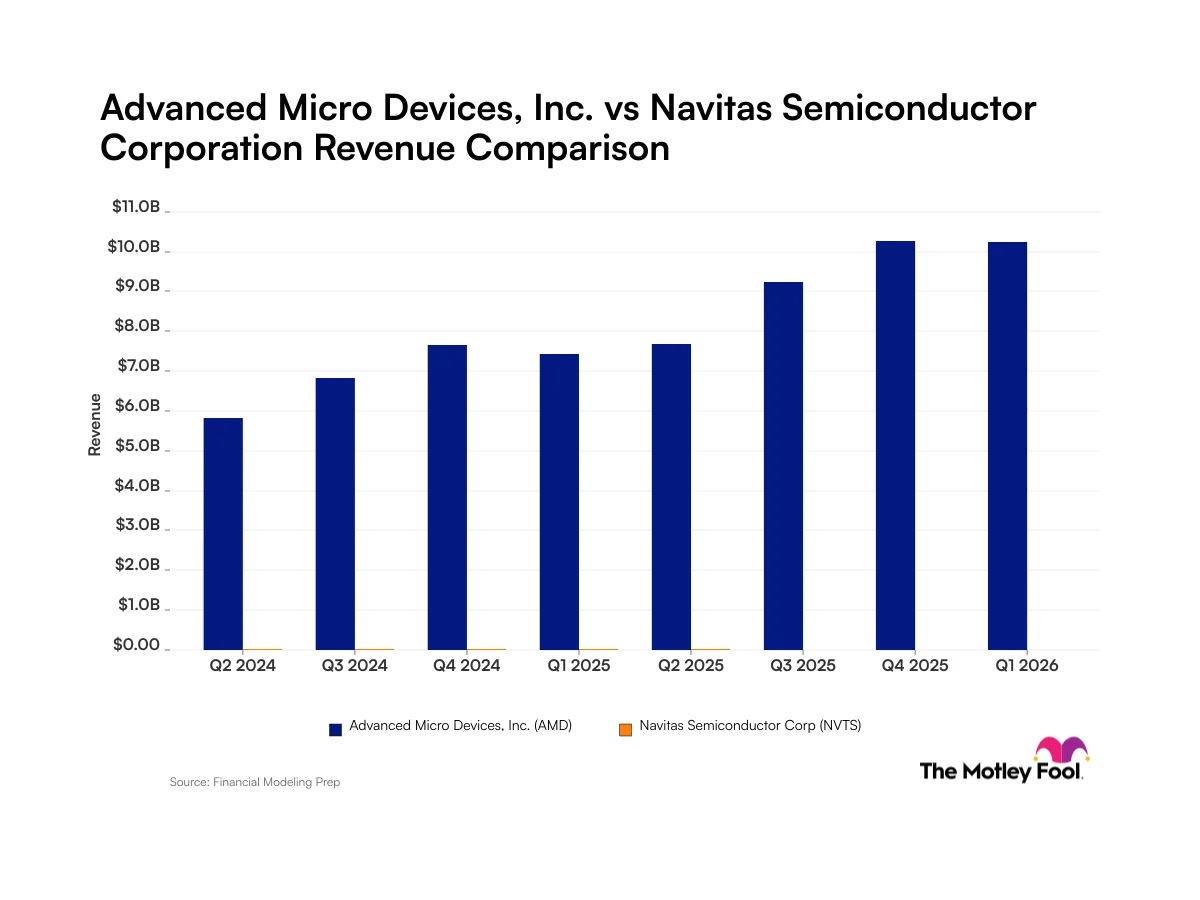
Two artificial intelligence chipmakers — Advanced Micro Devices and Navitas Semiconductor — are drawing investor attention as the AI hardware race intensifies, with each company's quarterly revenue trajectory offering a distinct window into how the sector is maturing and where capital may flow next.
AMD, one of the largest players in the AI accelerator market, has positioned itself as a direct rival to Nvidia in the data center GPU space, steadily growing its AI-related revenue streams as hyperscalers and cloud providers diversify away from single-vendor dependency. Its scale and product breadth give it a different risk-reward profile compared to smaller, more specialized competitors.
Read more Brent Crude Breaks $100 as Goldman Eyes $120 Next →
Navitas Semiconductor, by contrast, operates in the power semiconductor niche, focusing on gallium nitride and silicon carbide technologies that enable faster, more efficient power delivery — a critical bottleneck as AI data centers consume unprecedented amounts of electricity. Its quarterly revenue figures, while smaller in absolute terms, can signal early adoption curves that sometimes precede broader market moves.
For investors, comparing the two companies reveals a fundamental tension in AI investing: the choice between established scale with proven demand and emerging technology with potentially higher upside but greater execution risk. Revenue trend lines, quarter over quarter, serve as one of the clearest leading indicators of which bet the market is beginning to favor.
Understanding both companies' trajectories requires looking beyond top-line numbers to gross margins, customer concentration, and guidance — factors that distinguish durable AI infrastructure winners from short-cycle beneficiaries. Continue reading at Yahoo Finance.