Jobs Report Tanks, Markets Soar on Fed Rate-Hike Retreat
Wall Street posted its best week since April after a weak July jobs report convinced investors the Fed would hold rates steady.
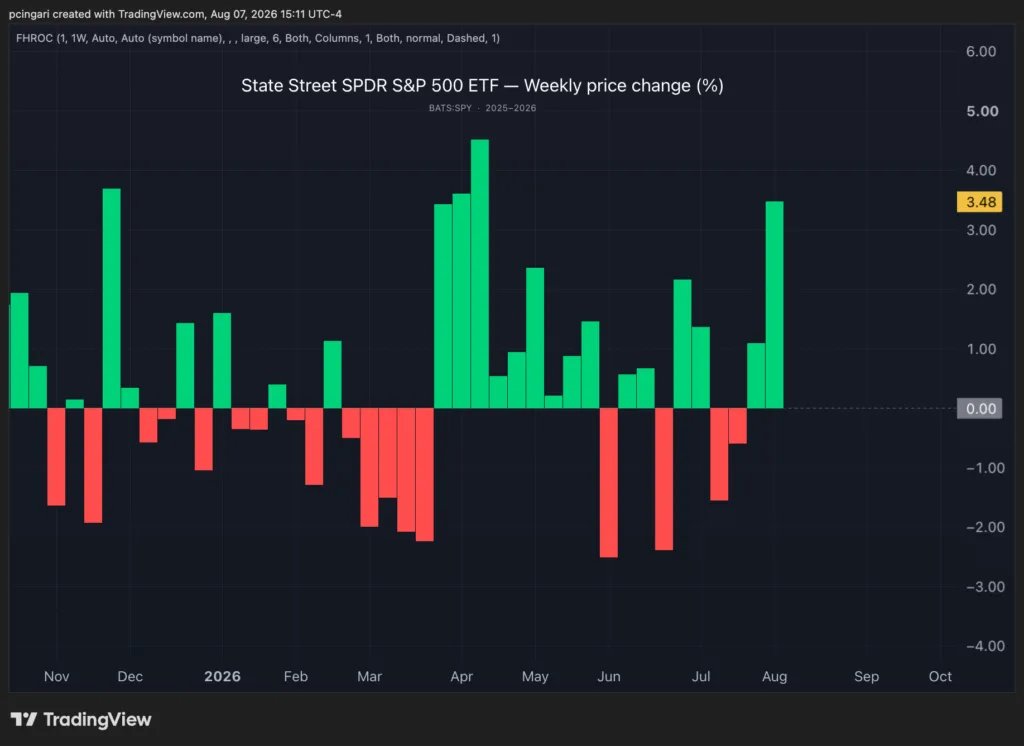
Wall Street defied economic gravity this week, logging its strongest weekly performance since April even as the U.S. economy shed 23,000 nonfarm payroll jobs in July — a result that fell well short of expectations. Investors interpreted the disappointing labor data not as a warning sign, but as a green light: a weakening job market, the thinking goes, removes pressure on the Federal Reserve to push interest rates any higher.
The bet paid off in real time. Anticipated policy rates dropped in the wake of the jobs report, and traders rushed into assets that benefit most when borrowing costs plateau or fall. Long-duration technology stocks — whose future earnings are more valuable when discounted at lower rates — surged alongside gold, which rallies when rate expectations ease and the dollar softens.
Read more Berkshire Hathaway Boosts Alphabet Stake by $17 Billion →
Broad market benchmarks reflected the optimism. Both the S&P 500 and Nasdaq 100 posted significant gains across the week, cementing a sentiment shift that had been building as inflation data gradually cooled. The move underscored how thoroughly Fed policy expectations now dominate market behavior, at times overshadowing underlying economic fundamentals.
Earnings season added further texture to the week's action. Several individual companies saw sharp stock moves — up and down — following quarterly results and forward guidance revisions, layering company-specific volatility on top of the macro-driven rally. Analysts noted the dynamic illustrated the tension between a slowing labor market and corporate earnings that have, in many cases, held up better than feared.
The week's paradox — bad news for workers translating into good news for portfolios — captures the unusual moment markets find themselves in. Continue reading at Sahm.